
Maharashtra is a popular destination for spiritual and religious tourism, especially for devotees of Lord Shiva. The state is traditionally associated with five important Jyotirlinga temples located across different regions. Knowing the list of jyotirlinga in maharashtra can help travellers plan a smooth pilgrimage, choose suitable routes and decide how many days are needed. Savali Holidays helps travellers plan religious tours and travel arrangements from Pune, Pimpri Chinchwad, Mumbai and other parts of India.
Table of Contents
- What Is a Jyotirlinga?
- How Many Jyotirlingas Are in Maharashtra?
- Places of the Jyotirlingas in Maharashtra
- Trimbakeshwar Jyotirlinga, Nashik
- Bhimashankar Jyotirlinga, Pune
- Grishneshwar Jyotirlinga, Aurangabad
- Aundha Nagnath Jyotirlinga, Hingoli
- Parli Vaijnath Jyotirlinga, Beed
- Maharashtra Jyotirlinga Tour Route
- 3 Jyotirlingas in Maharashtra: Can They Be Covered in a Short Trip?
- Best Time to Visit the Jyotirlingas
- How to Plan a Comfortable Jyotirlinga Tour
- Important Travel Tips
- Frequently Asked Questions
- Final Words
What Is a Jyotirlinga?
Jyotirlingas are sacred forms of Lord Shiva and have great importance in Hindu religious tradition. The word Jyotirlinga is associated with a divine pillar of light representing Lord Shiva.
There are traditionally twelve Jyotirlingas in India. Devotees from different parts of the country visit these temples to seek blessings and experience their spiritual atmosphere.
Maharashtra has five traditionally recognised Jyotirlinga temples. These temples are located in different districts, so visiting all of them requires proper planning.
A Jyotirlinga tour is not only a religious journey but can also be an opportunity to explore Maharashtra’s different landscapes, local culture, historic areas and natural surroundings.
How Many Jyotirlingas Are in Maharashtra?
Five Jyotirlingas are traditionally associated with Maharashtra. They are:
- Trimbakeshwar Jyotirlinga, Nashik
- Bhimashankar Jyotirlinga, Pune
- Grishneshwar Jyotirlinga, Aurangabad
- Aundha Nagnath Jyotirlinga, Hingoli
- Parli Vaijnath Jyotirlinga, Beed
These temples are spread across North Maharashtra, Western Maharashtra and the Marathwada region.
Because of the distance between the temples, travellers should decide whether they want to visit all five or choose two or three temples for a shorter pilgrimage.
Places of the Jyotirlingas in Maharashtra
The first temple is Trimbakeshwar Jyotirlinga, located at Trimbak near Nashik. It is surrounded by the Sahyadri hills and is an important pilgrimage destination.
The second is Bhimashankar Jyotirlinga, located in the Pune region. It is situated in the Sahyadri hills and is known for its peaceful natural surroundings.
The third is Grishneshwar Jyotirlinga, located near Aurangabad. Its location makes it convenient to combine a temple visit with other attractions in the surrounding region.
The fourth is Aundha Nagnath Jyotirlinga, located in Hingoli district. It is an important Shiva temple in the Marathwada region.
The fifth is Parli Vaijnath Jyotirlinga, located in Parli, Beed district. It is another important pilgrimage destination in Marathwada.
Trimbakeshwar Jyotirlinga, Nashik
Trimbakeshwar Jyotirlinga is located at Trimbak, near Nashik. It is one of the most important Shiva pilgrimage destinations in Maharashtra.
The temple is surrounded by the scenic Sahyadri hills and has traditional architecture. The surrounding area also has strong religious significance because of its connection with the Godavari River.
For many travellers, Trimbakeshwar becomes one of the main stops on a Maharashtra pilgrimage tour.
How to Reach Trimbakeshwar
Trimbakeshwar is easily accessible by road from Nashik. Nashik is well connected with major cities in Maharashtra by road and rail.
Travellers coming from Pune or Mumbai can travel towards Nashik and then continue to Trimbak.
Best Way to Plan the Visit
Try to reach the temple early in the morning, especially if travelling on weekends or during religious festivals. Temple crowds can be higher on Mondays and special occasions.
Keep sufficient time for darshan rather than planning several activities on the same day.
Bhimashankar Jyotirlinga, Pune
Bhimashankar Jyotirlinga is located in the Sahyadri hills in the Pune region. It is one of the most popular religious destinations for devotees travelling from Pune and nearby areas.
The temple is surrounded by forests, hills and greenery. Because of its location, Bhimashankar offers a different experience compared with Jyotirlingas located in urban areas.
The journey towards the temple can also be enjoyable, particularly for travellers who like scenic road trips.
How to Reach Bhimashankar
Bhimashankar is mainly accessed by road. It can be reached from Pune and other nearby cities.
Since the temple is located in a hilly region, travellers should keep sufficient travel time. During the monsoon, road journeys may take longer because of rain and traffic.
Things to Keep in Mind
Comfortable clothing and footwear are recommended. Travellers should also carry drinking water and basic essentials, especially when visiting with family members.
If you are planning a multi temple tour, Bhimashankar can be an ideal starting point when travelling from Pune.
Grishneshwar Jyotirlinga, Aurangabad
Grishneshwar Jyotirlinga is located near Verul in the Aurangabad region of Maharashtra. It is an important pilgrimage site dedicated to Lord Shiva.
The temple is known for its traditional architecture and spiritual atmosphere. The surrounding region is also known for its historical and cultural importance.
For travellers planning a longer Maharashtra trip, Grishneshwar can be combined with other nearby attractions.
How to Reach Grishneshwar
Grishneshwar can be reached by road from Aurangabad. Aurangabad is an important travel centre with road, rail and air connectivity.
Travellers from Pune or Mumbai can include Grishneshwar after visiting Nashik and Trimbakeshwar, depending on their preferred route.
Best Time for Darshan
The temple can be visited throughout the year. However, festivals, Mondays and other important religious occasions can bring larger crowds.
Travellers who prefer a quieter visit may choose weekdays outside major festival periods.
Aundha Nagnath Jyotirlinga, Hingoli
Aundha Nagnath Jyotirlinga is located in Hingoli district in the Marathwada region of Maharashtra.
It is an important destination for Shiva devotees and attracts pilgrims from different parts of the state. The temple can be included in a longer Marathwada pilgrimage covering other religious destinations.
How to Reach Aundha Nagnath
Aundha Nagnath is mainly accessible by road from nearby towns and cities.
For travellers visiting all five Jyotirlingas, it is better to include Aundha Nagnath after covering the western and central parts of Maharashtra rather than making unnecessary backtracking journeys.
Travel Planning Tip
Because Aundha Nagnath is farther from Pune and Mumbai, keep sufficient time for the road journey. Starting early can make the travel day more comfortable.
Parli Vaijnath Jyotirlinga, Beed
Parli Vaijnath Jyotirlinga is located in Parli in Beed district. It is one of the important Shiva pilgrimage destinations in Maharashtra.
The temple attracts devotees throughout the year. The number of visitors can increase significantly during Mahashivratri and other important religious occasions.
How to Reach Parli Vaijnath
Parli has road and rail connectivity with several parts of Maharashtra. The most suitable option depends on your starting point and overall itinerary.
If you are already visiting Aundha Nagnath, Parli Vaijnath can be included as another stop in the Marathwada section of your pilgrimage.
Best Travel Approach
Keep sufficient time for temple darshan and rest. Avoid planning long-distance travel immediately after a busy temple visit if travelling with elderly people or children.
Maharashtra Jyotirlinga Tour Route
The five Jyotirlingas are located in different regions, so there is no single route that suits every traveller.
For someone starting from Pune, one possible route is:
Pune → Bhimashankar → Nashik → Trimbakeshwar → Aurangabad → Grishneshwar → Aundha Nagnath → Parli Vaijnath
This route can be changed according to the starting city, number of available days and preferred mode of transport.
Travellers starting from Mumbai may visit Trimbakeshwar first and then continue towards Aurangabad and the Marathwada region.
How Many Days Are Needed?
A complete five temple pilgrimage can generally require around 5 to 8 days, depending on the pace of travel.
Travellers who want a relaxed journey should keep extra time for:
- Temple darshan
- Traffic
- Meals
- Rest
- Accommodation
- Local sightseeing
- Unexpected road delays
A rushed itinerary may save a day but can make a spiritual journey tiring. A balanced schedule is usually better.
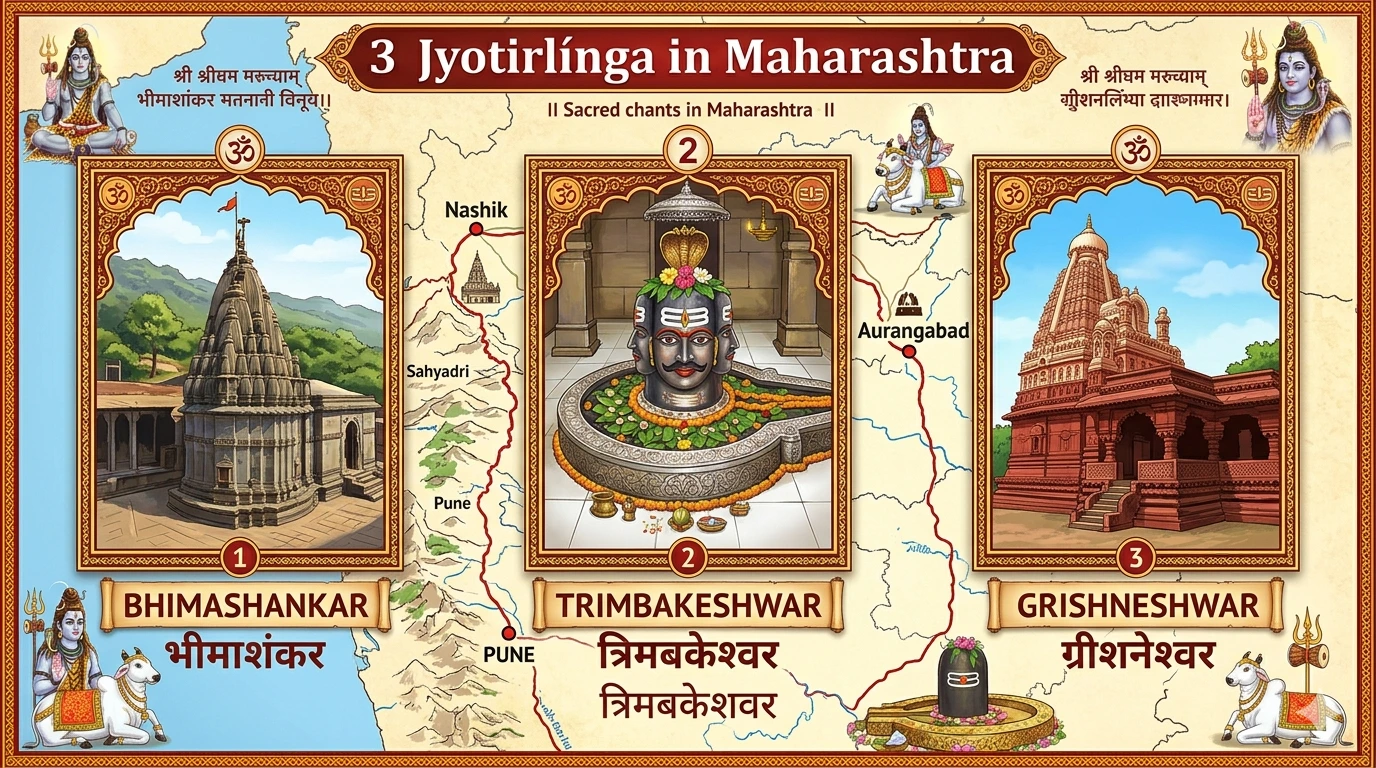
3 Jyotirlingas in Maharashtra: Can They Be Covered in a Short Trip?
Yes, 3 Jyotirlingas can be covered in a short trip with proper planning.
Travellers with limited time can choose Bhimashankar, Trimbakeshwar and Grishneshwar. A practical route from Pune is:
Pune → Bhimashankar → Nashik → Trimbakeshwar → Aurangabad → Grishneshwar
This can be planned in around 3 to 4 days, depending on road conditions and time spent at each temple.
Best Time to Visit the Jyotirlingas
October to February
This is generally a comfortable period for road travel and temple visits. The weather is suitable for long journeys and sightseeing.
March to May
Summer can be hot, particularly during the afternoon. Early morning temple visits are more comfortable.
June to September
The monsoon brings greenery and beautiful surroundings, especially around Bhimashankar. However, heavy rain can affect road conditions and travel time.
Mahashivratri
Mahashivratri is one of the busiest periods at Shiva temples. Devotees who want to visit during this festival should plan transportation and accommodation well in advance.
How to Plan a Comfortable Jyotirlinga Tour
Choose Your Starting Point
Start by deciding whether you are travelling from Pune, Mumbai, Nashik, Aurangabad or another city. Your starting point will influence the most efficient route.
Decide the Number of Temples
If you have limited time, visiting two or three temples may be more comfortable. If you have a week or more, you can consider covering all five.
Plan Accommodation
Choose accommodation according to the next destination. Staying close to your next day’s route can reduce unnecessary travel.
Keep Temple Time Separate
Do not treat temple darshan as a quick stop between two long journeys. Keeping enough time makes the pilgrimage more peaceful.
Consider Your Travel Group
Families with children or elderly travellers may need more breaks and a slower itinerary. A flexible schedule is better for a family pilgrimage.
Important Travel Tips
Start Early
Early morning departures help avoid traffic and provide more time for darshan.
Check Temple Timings
Temple timings and darshan arrangements may change during festivals and special occasions. Check the latest information before travelling.
Carry Basic Essentials
Keep drinking water, medicines, identification documents, chargers and other personal essentials.
Wear Comfortable Clothing
Choose simple and comfortable clothes suitable for temple visits and long journeys.
Keep Extra Time
Do not make an itinerary where every hour is fixed. Traffic, weather and temple queues can cause delays.
Book During Peak Periods
Accommodation and transport can become busy during festivals, weekends and holidays. Advance planning is useful.
Frequently Asked Questions
1. How many Jyotirlingas are traditionally associated with Maharashtra?
Five Jyotirlingas are traditionally associated with Maharashtra: Trimbakeshwar, Bhimashankar, Grishneshwar, Aundha Nagnath and Parli Vaijnath.
2. Which Jyotirlinga is closest to Pune?
Bhimashankar is the major Jyotirlinga destination located in the Pune region and is commonly visited from Pune by road.
3. Can all five Jyotirlingas be covered in one trip?
Yes. A properly planned journey of around 5 to 8 days can cover all five temples, depending on travel pace.
4. Which Jyotirlinga is near Nashik?
Trimbakeshwar Jyotirlinga is located near Nashik and is one of the major Shiva pilgrimage destinations in Maharashtra.
5. Can three Jyotirlingas be covered in three days?
It is possible with a tight itinerary, but 3 to 4 days is generally more practical for comfortable travel and darshan.
Final Words
A Maharashtra Jyotirlinga tour is a meaningful spiritual journey for devotees of Lord Shiva. The five temples are located across different parts of the state, offering travellers an opportunity to experience Maharashtra’s religious traditions, natural surroundings and cultural heritage.
Whether you choose to visit all five temples or plan a shorter three temple pilgrimage, proper route planning can make the journey more comfortable. Savali Holidays is a travel agency in Pune serving travellers from Pimpri Chinchwad, Mumbai and other parts of India, helping with travel and tour planning for religious and other journeys.